
Last Updated: November 17, 2026
Quick Summary
To price a first product for online sales, add every cost per unit, materials, labor, packaging, shipping, payment and marketplace fees, returns, discounts, and overhead, then divide unit cost by (1 minus your target margin). Build a product pricing calculator so you can test list prices and see the profit and margin each one produces before committing to inventory.
- Product cost per unit includes materials, labor, packaging, shipping, fees, and overhead.
- The cost-plus formula divides unit cost by (1 minus target margin).
- Markup is a percentage of cost; margin is a percentage of price.
- A 10% to 15% marketplace commission is a real deduction, not ignorable.
- Test one variable per price experiment so results stay readable.
Table of Contents
- Start With the Cost: How to Calculate Product Cost Per Unit
- The Formula: How to Determine Price of a Product Formula
- Build a Product Pricing Calculator for Your First Product
- How to Price Items for Resale Without Racing to the Bottom
- Frequently Asked Questions
Start With the Cost: How to Calculate Product Cost Per Unit
Product cost per unit is everything it takes to get one item to a customer: materials, labor, packaging, shipping, and fees. Most beginners miss the last three, the mistake that sinks a first launch.
- Direct costs: materials, components, and assembly labor
- Packaging: boxes, mailers, inserts, labels
- Shipping: inbound freight plus outbound delivery
- Fees: payment processing and marketplace commissions
- Overhead: a share of software, storage, and equipment
Add those together and divide by units produced. That's your unit cost, everything else in pricing builds on it.
Watch out: leaving out payment and marketplace fees is a common costing error. A product that looks profitable on paper can lose money on every sale.
The Formula: How to Determine Price of a Product Formula
The cost-plus formula is simple: unit cost × markup = selling price. That's the starting point for how to determine price of a product formula, but not the finish line.
- Add all direct and indirect costs to get your unit cost
- Choose a target margin
- Divide unit cost by (1 minus target margin)
- Check the result against competitor prices
- Adjust for perceived value and positioning
Say your unit cost is 10. At a 60% target margin, you divide 10 by 0.40. Your price is 25.
Markup is a percentage of cost; margin is a percentage of price. Mixing them up leads to underpricing.
The formula is only part of the work. To turn a raw idea into a sellable offer first, see how to turn a business idea into an offer.
Build a Product Pricing Calculator for Your First Product
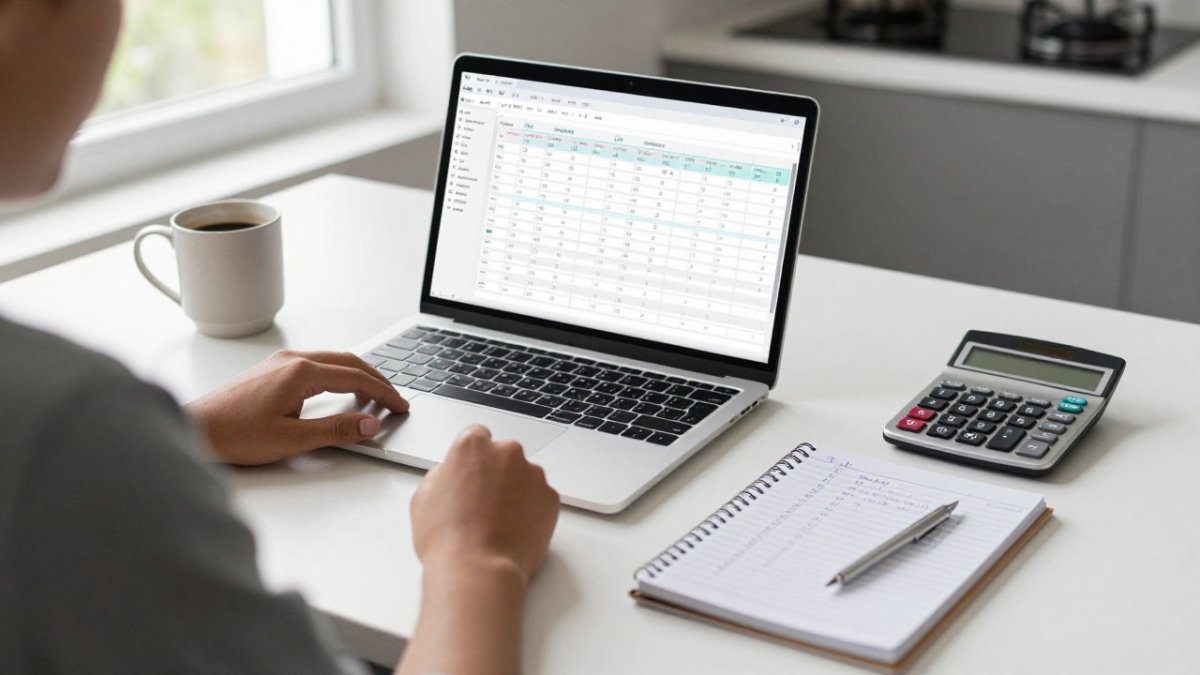
A product pricing calculator turns guesswork into a repeatable routine. A spreadsheet with the right columns does the job, and once built you can change one cell at a time to test scenarios before committing to inventory.
- Materials and components
- Labor to make or assemble
- Packaging (box, mailer, insert, label)
- Inbound freight per unit
- Outbound shipping per unit
- Payment processing fee
- Marketplace or platform commission
- Returns and damage allowance
- Discount and promotion allowance
- Overhead allocation
- Total unit cost
- Target margin
- Calculated price
- Competitor price range
- Final launch price
A worked example for a first physical product
Here is a transparent calculation for a simple physical product. The numbers are illustrative; substitute your own.
- Materials: 4.00 per unit
- Labor: 3.00 per unit
- Packaging: 1.00 per unit
- Inbound freight: 0.50 per unit
- Outbound shipping to customer: 4.00 per unit
- Payment processing: a percentage plus a fixed fee per transaction
- Marketplace commission: a percentage of sale price
- Returns and damage allowance: 3% of sale price
- Discount allowance: 5% of sale price
- Overhead allocation: 1.50 per unit
Your fixed per-unit cost before percentage fees is 4.00 + 3.00 + 1.00 + 0.50 + 4.00 + 1.50 = 14.00. At a 30.00 list price, payment processing is 0.87 + 0.30 = 1.17, marketplace commission is 3.00, returns allowance is 0.90, and discount allowance is 1.50, total deductions 6.57.
At 25.00, deductions shrink to about 5.53, profit is 5.47 (21.9% margin). At 35.00, profit rises to about 12.62 (36.1% margin). The calculator lets you see that jump before you pick a number.
How platform fees change your minimum viable price
The same product does not have the same floor on every channel.
To find your minimum viable price, set profit to zero and solve for price.
Watch out: leaving returns, discounts, and marketplace commission out of the calculator can make a first product look profitable in the spreadsheet while it loses money in the bank.
If you want a structured path from first idea to first offer, the First Mover Method system for beginners walks you through spotting a market shift and building around it.
The worked example shows how the same unit cost produces a different profit and margin at each list price.
| List price | Total deductions | Profit per unit | Margin |
|---|---|---|---|
| 25.00 | about 5.53 | 5.47 | 21.9% |
| 30.00 | 6.57 | 9.43 | 31.4% |
| 35.00 | not stated | about 12.62 | 36.1% |
Profit per unit and margin at each list price
How to Price Items for Resale Without Racing to the Bottom
Pricing resale items means protecting margin in a market where everyone sees everyone else's price. The lowest price wins the click and loses the profit. For a first product, the goal is not to be cheapest; it is to find a launch price you can defend and validate it before buying deep inventory.
Start with landed cost: purchase price plus inbound shipping plus duties plus payment and platform fees. Then set a floor you will not go below, break-even plus a minimum acceptable margin, including allowances for the deductions beginners forget.
The deductions that erode a first seller's margin
- Returns: even a modest return rate means some units come back unsellable or need repackaging. Building a returns allowance into the sale price protects margin.
- Discounts and promotions: launch discounts, coupon codes, and seasonal sales reduce net revenue. If you plan a 10% launch discount, build it into the list price rather than absorbing it from margin.
- Taxes: sales tax and VAT are usually collected from the customer, but marketplace facilitator rules and remittance timing affect cash flow. Confirm who collects and remits before setting a price.
- Marketplace commissions: a 10% to 15% commission is a real deduction, not a cost you can ignore.
Scenario check: if landed cost is 12.00, target price is 30.00, and you expect a 5% return rate plus a 10% launch discount, effective revenue is closer to 25.50 before fees. Recalculate margin at that effective revenue, not the list price.
A practical first-launch pricing workflow
- Estimate landed cost per unit, including inbound freight and duties.
- Add packaging, outbound shipping, and fulfillment costs.
- Add payment processing and marketplace commission as percentages.
- Add allowances for returns, discounts, and taxes.
- Calculate break-even price and a target-margin price.
- Compare both against competitor prices and perceived value.
- Choose a launch price and a floor you will not cross.
- Test the price with real buyers before scaling inventory.
How to validate a price before committing
You don't need a full launch to learn whether a price works. Customer interviews, a preorder page, a landing-page test, and small price experiments all produce signals. Measure conversion rate, add-to-cart rate, refund and return requests, and profit per unit, not just traffic. A price that converts but produces thin profit is a warning, not a win.
Watch out: changing price and traffic sources at the same time makes the result unreadable; change one variable per test so you know what moved conversion.
Price changes after launch
Once live, monitor conversion and profit weekly. Raise prices when demand is strong and returns are low; lower them when conversion stalls and the floor still protects margin. Communicate changes clearly and honor any advertised price for the period you stated.
- Compete on bundle and service, not price alone
- Track conversion rate, not just traffic
- Test small price changes before discounting broadly
For sellers launching lean, the guide on launching a business with low capital covers the cost constraints that shape resale pricing.
Pricing a first product is where most beginners stall, and it's where a clear system saves months of second-guessing. First Mover OS gives you a step-by-step path to spot market shifts early, turn insight into an offer, and price it with confidence.
Frequently Asked Questions
What costs should I include when pricing my first product?
Include every cost that appears before the sale: materials, labor, packaging, shipping to you, marketplace fees, payment processing fees, and a share of overhead such as software or storage. Add returns and discount allowances too. If a cost exists only because you sold the item, it belongs in your unit cost. Missing even one line, especially payment processing or fulfillment fees, quietly shrinks your profit margin and can push a first product below break-even.
How do I calculate product cost per unit?
Add direct costs (materials, labor, packaging) to indirect costs allocated per unit (overhead, platform fees, shipping supplies). Divide total batch costs by the number of sellable units. For example, if a batch of 50 costs 750 in materials, 200 in labor, and 100 in packaging, your unit cost is 21. Then add per-order fees like payment processing and marketplace commissions to get your true landed cost per sale.
How can I test whether customers will pay my product's price?
Run a small pre-launch test: offer the product at your target price to a narrow audience, track conversion rate and objections, and compare against a slightly higher and lower price point. Watch willingness to pay, not just clicks. If conversion holds at the higher price, your perceived value supports it. If it collapses, adjust positioning or bundle rather than cutting price immediately. Validate before committing to a large inventory order.
